


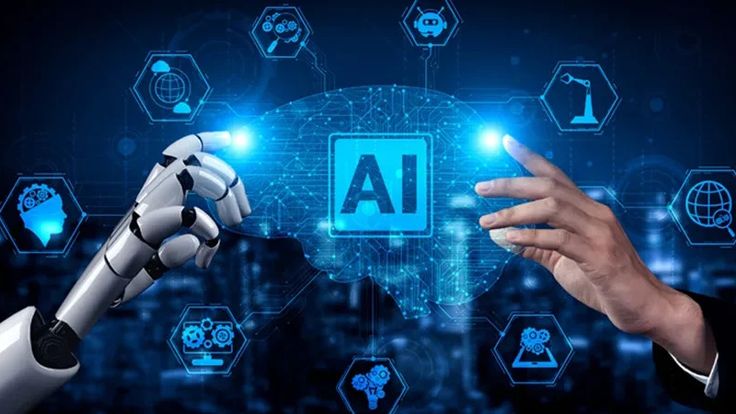
What AI Industrialization Really Means (And Why 2026 Is Different)
AI industrialization is the stage where artificial intelligence moves from:
- Tools → infrastructure
- Experiments → systems
- Optional → unavoidable
In 2026:
- AI will be embedded into finance, healthcare, education, media, logistics, and governance
- Companies will hire fewer people but expect **AI-augmented productivity**
- Nations that fail to adapt will struggle with unemployment and skills mismatch
This is not speculation. It is acceleration.
The Silent Risk: Being Technically Employed but Professionally Obsolete
One of the biggest dangers of AI industrialization is not job loss—it is irrelevance.
Many people will still have jobs, but:
- Their skills will no longer matter
- Their output will be slower than AI-assisted peers
- Their bargaining power will collapse
AI doesn’t replace humans. It replaces humans who refuse to adapt.
Why 2026 Will Reward the Prepared (And Punish the Passive)
Those who prepare early will:
- Work faster with AI
- Earn more with fewer hours
- Compete globally, not locally
- Create new roles instead of chasing old ones
Those who don’t will:
- Be stuck in shrinking job markets
- Be forced into low-value work
- Depend on outdated systems
- AI industrialization does not need your permission
The Skills That Will Matter Most in the AI-Driven Economy
Preparing for AI does NOT mean becoming a programmer overnight.
It means developing, AI-adjacent, AI-resistant, and AI-amplified skills such as:
Critical thinking and problem framing
Prompting and AI tool usage
- Data literacy
- Creativity and storytelling
- Strategy and decision-making
- Ethics and human judgment
People who can think, guide, and interpret AI will always be needed.
Why Africa and Emerging Economies Must Prepare Faster
For Africa and other emerging economies, AI industrialization is both a threat and an opportunity.
The threat:
- Rapid automation without reskilling
- Increased inequality
- Job displacement without safety net
The opportunity:
- Competing globally through remote work
- Building AI-powered startups and solutions
- Leapfrogging outdated systems
Preparation is no longer optional—it is strategic survival. This is one of the most uncomfortable reality check
In 2021, learning AI felt optional.
In 2023, it felt interesting.
In 2025, it felt urgent.
By 2026, it will feel late.
History shows this pattern every time:
Those who adapt early lead.
Those who wait complain.
Those who resist disappear.
AI industrialization is not coming to ask if you’re ready.
How to Start Preparing for AI Industrialization (Without The Overwhelm That Comes With It.)
You don’t need to do everything. You need to do something.
Start with:
- Understanding how AI affects your industry
- Learning to work with AI tools, not against them
- Building skills that AI supports rather than replaces
- Staying curious, not defensive
Preparedness is built through consistent exposure, not panic.
The Biggest Mistake People Will Regret in 2026
The biggest mistake will not be ignoring AI. It will be assuming:
“I’ll adapt when it becomes necessary.” By the time it feels necessary, the advantage will already belong to someone else.
Final Thought: AI Will Not Decide Your Future—Your Preparation Will
AI industrialization will reshape the world, but it will not remove human agency.
Your relevance in 2026 will depend on:
- How early you prepared?
- How well you adapted?
- How willing you were to learn?
The future is not anti-human, it is anti-unprepared. And the best time to start preparing was yesterday.
The second-best time is now.
